Rifles
 Mauser project: The beginning
Even though the course require that I build a minimum of three rifles, an additional requirement is that one of these must use a military surplus Mauser action. There is many options available that can be used and the one I chose was M48A Mauser. These were built in Yugoslavia by Zastava and is a version of the FN designed Mauser Model 1924. Thank you to Matt for selling me the rifle for this project. I hope you like what I am doing with it. The rifle was in good condition and as I started working on it, realized that it had been refinished by an arsenal and had not seen much use since then. The only part of the old rifle that I need is the action and the bolt. I am building this rifle as a hunting rifle and when finished, will be chambered in .257 Roberts and have a one-piece wood stock made by me.
Please note that this work took place earlier this semester.
I started by disassembling the old rifle.
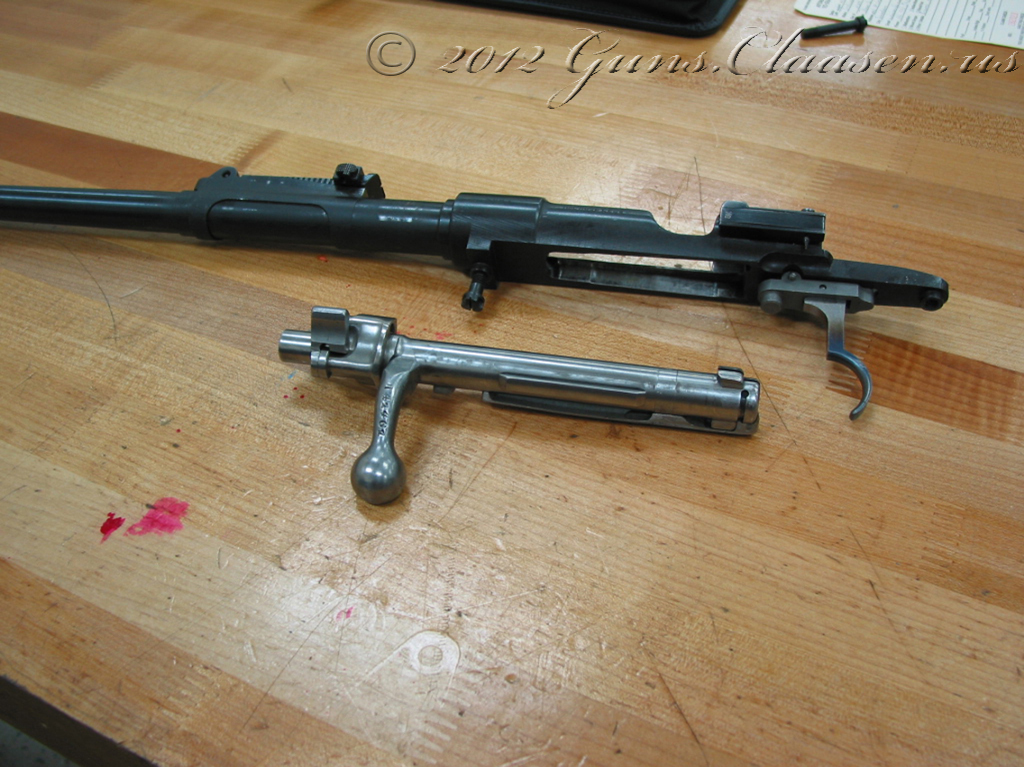
Action, old barrel and bolt
Then the action was mounted in a lathe and trued.
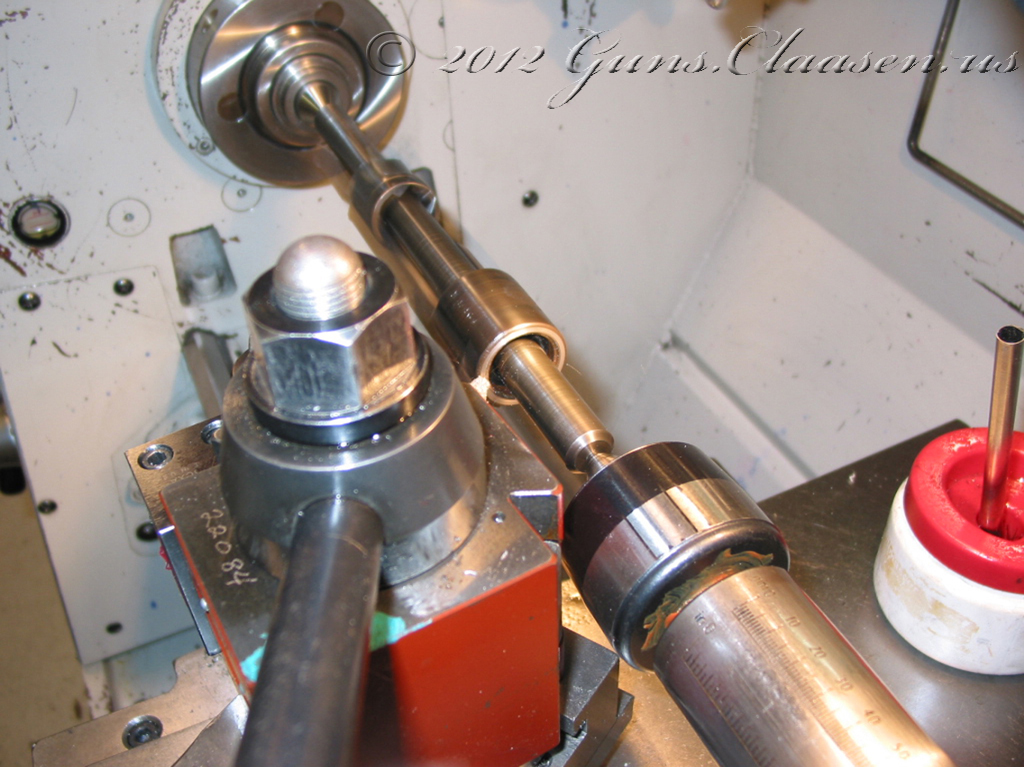
Truing the action
On the M48A action there is a bump on the rear of the receiver. It has a slot where cartridges on stripper clips can be inserted. However, this just does not look good. I removed the hump and smoothed the metal work.
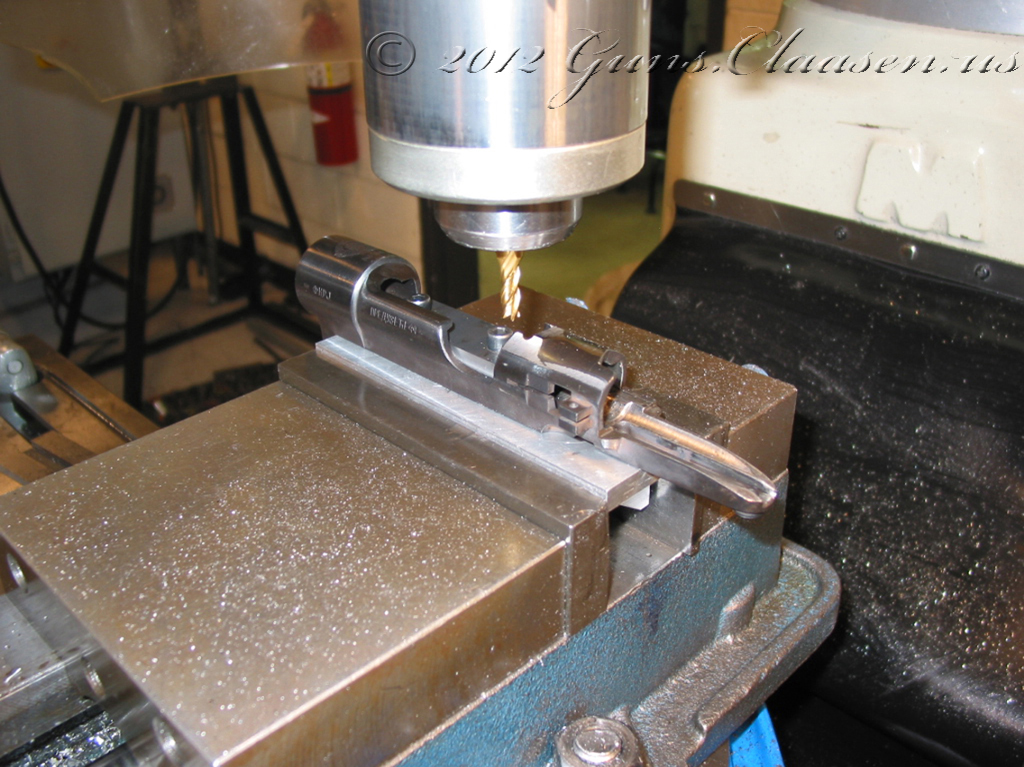
Milling out the stripper clip slot
Although the stripper clip slot can still be seen, I am leaving it as such for the time being.
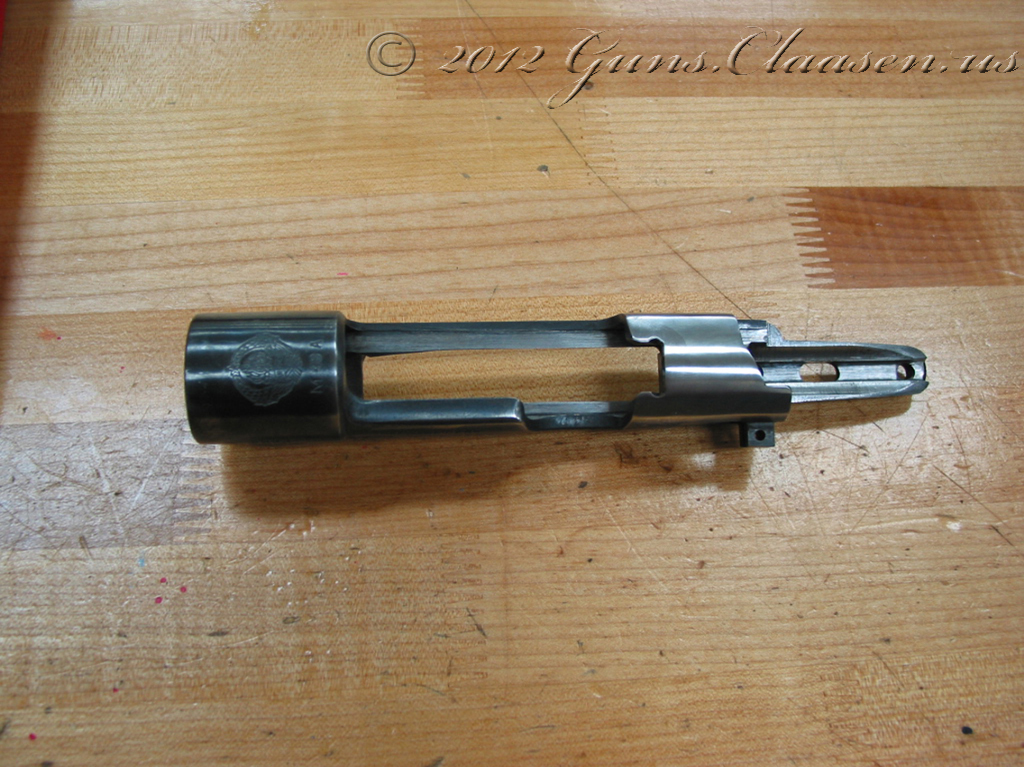
Action with hump removed
My attention then turned to the bolt. I started by heating the bolt handle and forging it into a new, more graceful shape. The picture also shows two tools I made in the first semester. Screwed in the back of the bolt is a bolt mandrel which (in this case) helps to draw heat away from the bolt body. The bolt sits inside a bolt bending block.
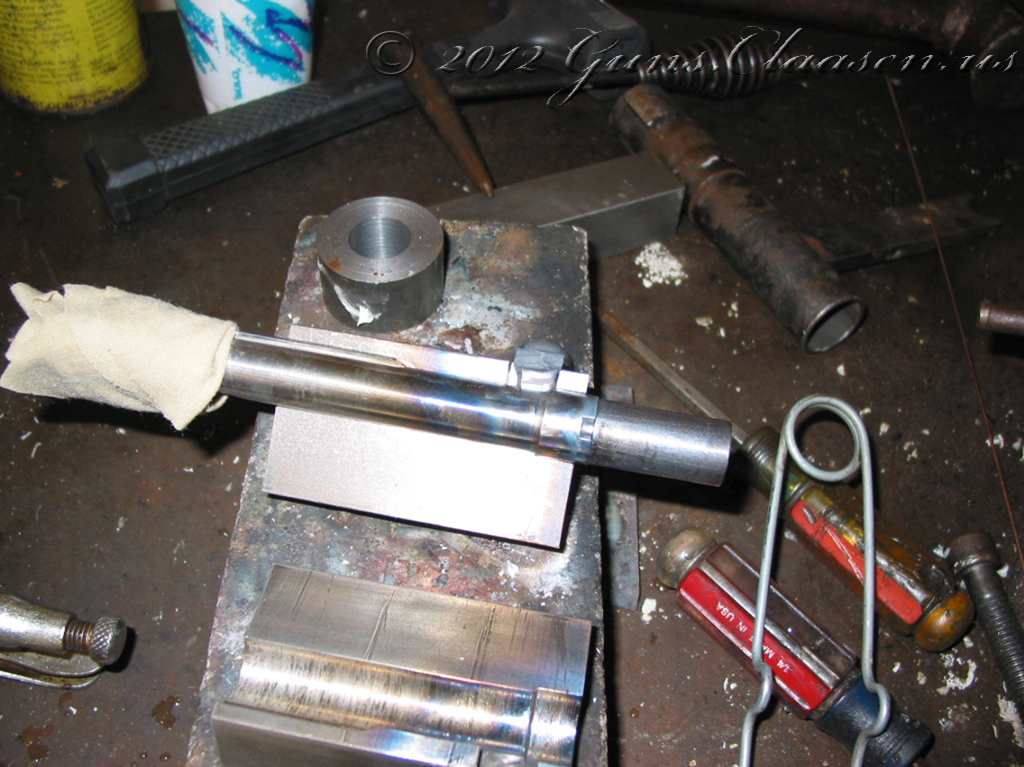
Forging the bolt handle
The next picture was taken during the process. I still needed to sweep the handle backwards a little.
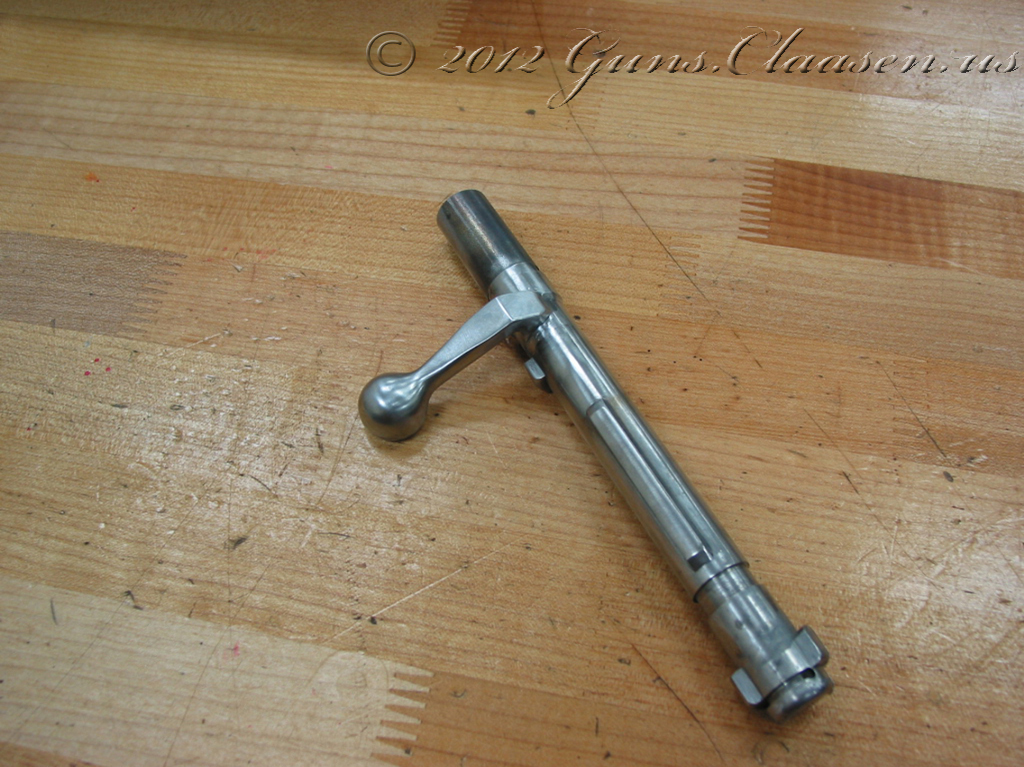
Straight bolt handle
The next three pictures show the bolt handle after I swept the handle back, the receiver and how they fit together. I had to cut a small notch in the receiver body to allow the bolt to fully close.
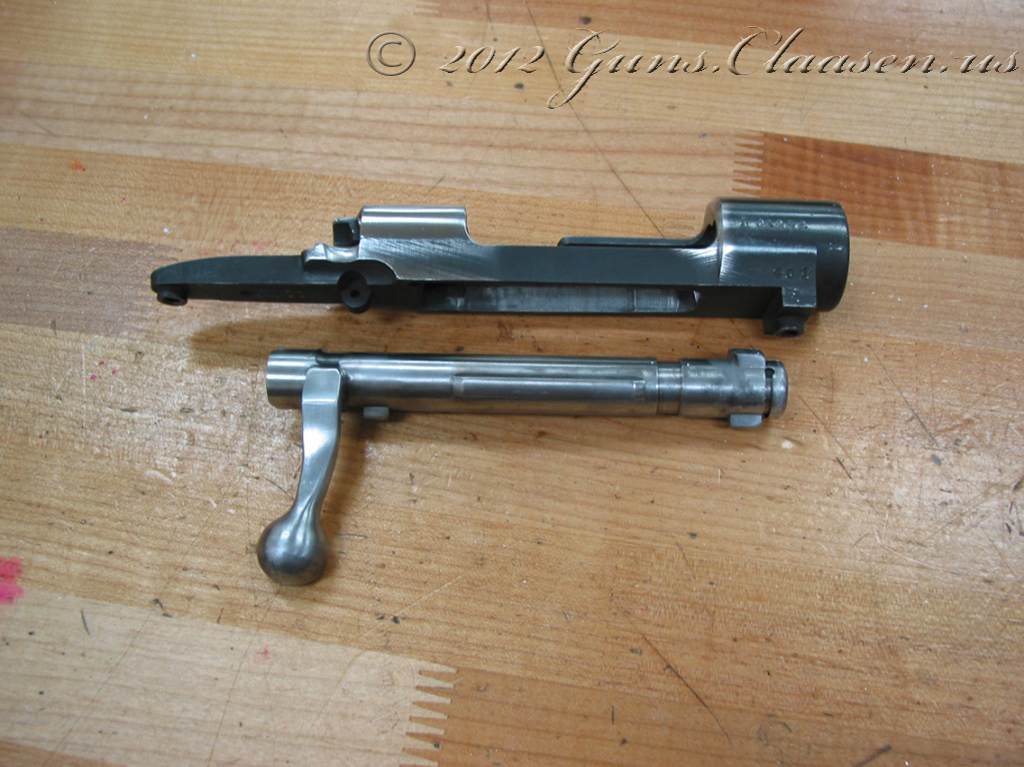
Bolt and receiver
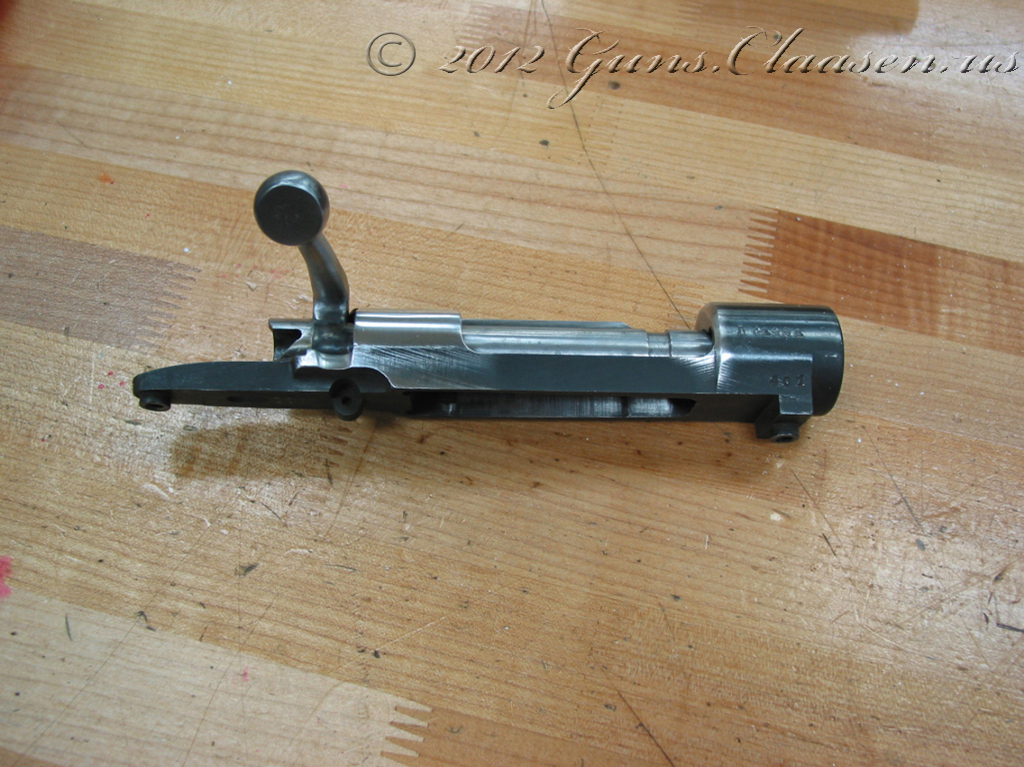
Action open
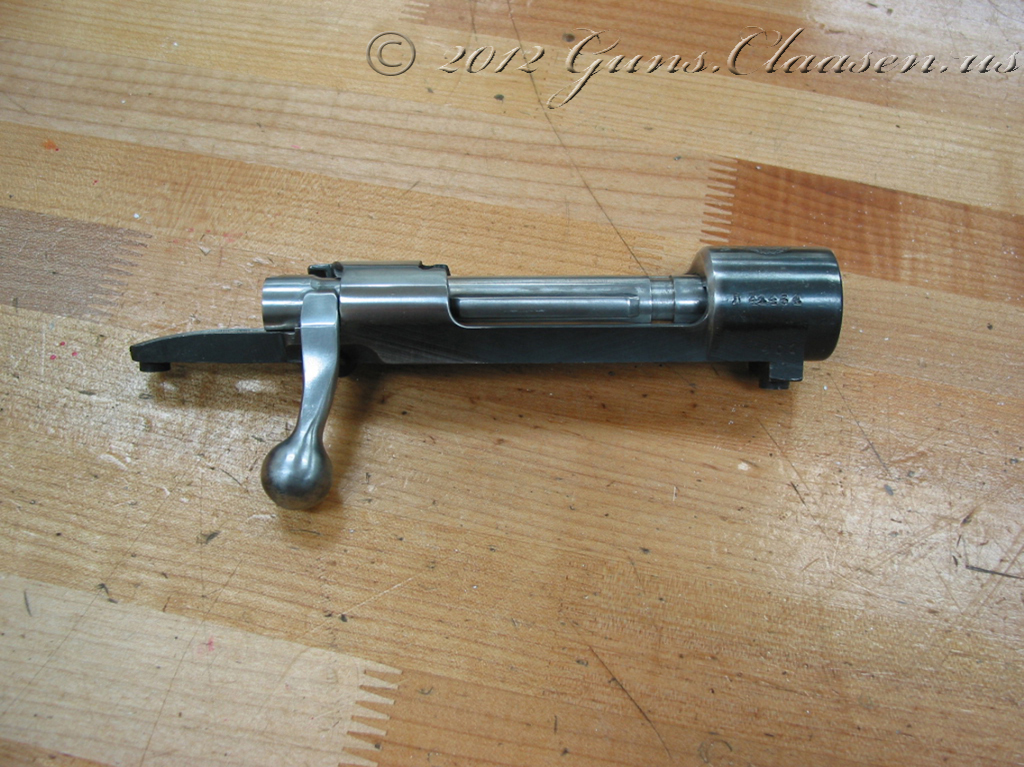
Action closed
So far, so good!
 Posted in
  Tags:
Tags: 
Remington 700 project: Action blueprinting
With the blueprinting work on the bolt finished, it is now time for the receiver. As with the bolt, I use a fixture to clamp the receiver in the lathe and center the work. Run-out on this setup was slightly better than the bolt fixture. The rod sticking through the receiver is only used to measure run-out. It is removed (actually pushed back as it fits really tight) when the work starts.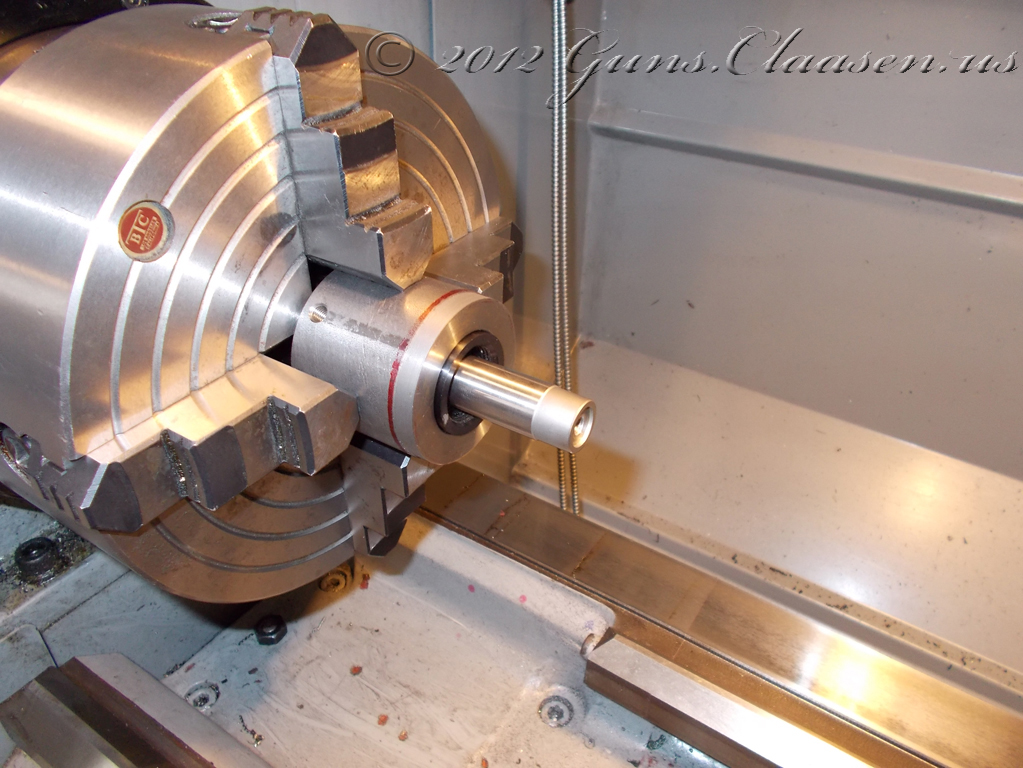
Here is the work halfway done. This photo was taken after the first cut and you can see that the face of the receiver is not quite square. Even though the factory has good tolerances in their manufacturing process, you can get better results with a little extra work.
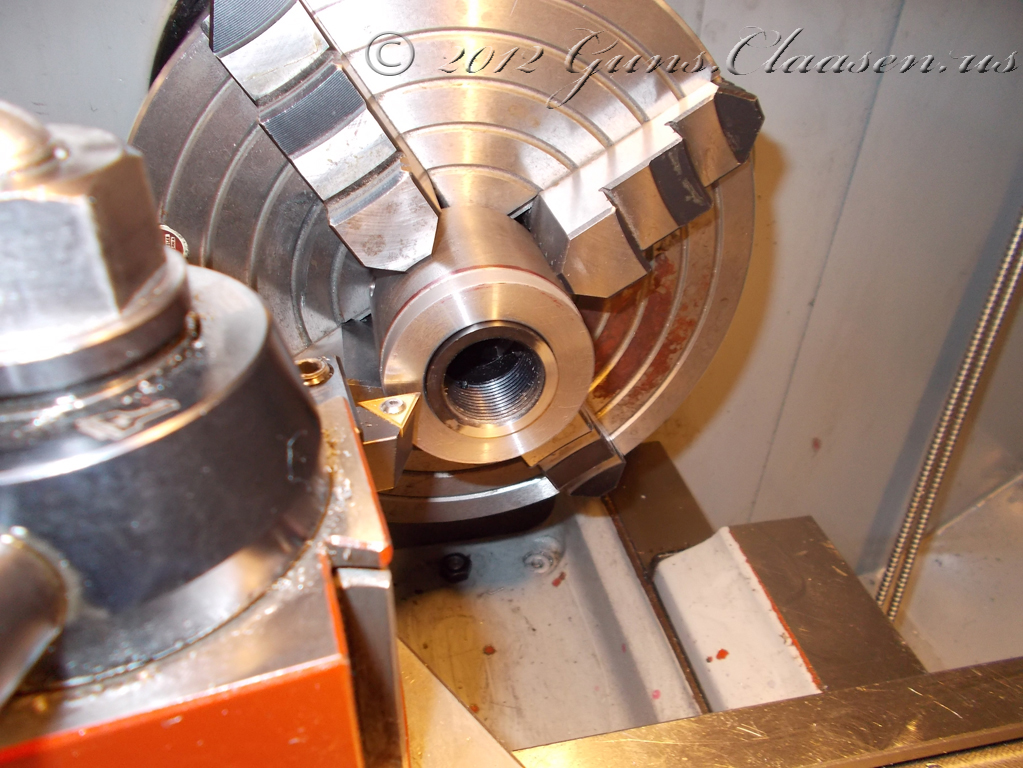
The next step is to square and true the inside of the receiver. I use a small boring bar to get inside the receiver. It is difficult to see in the first picture what I am cutting, but this is done to square up the recoil lugs inside the receiver.
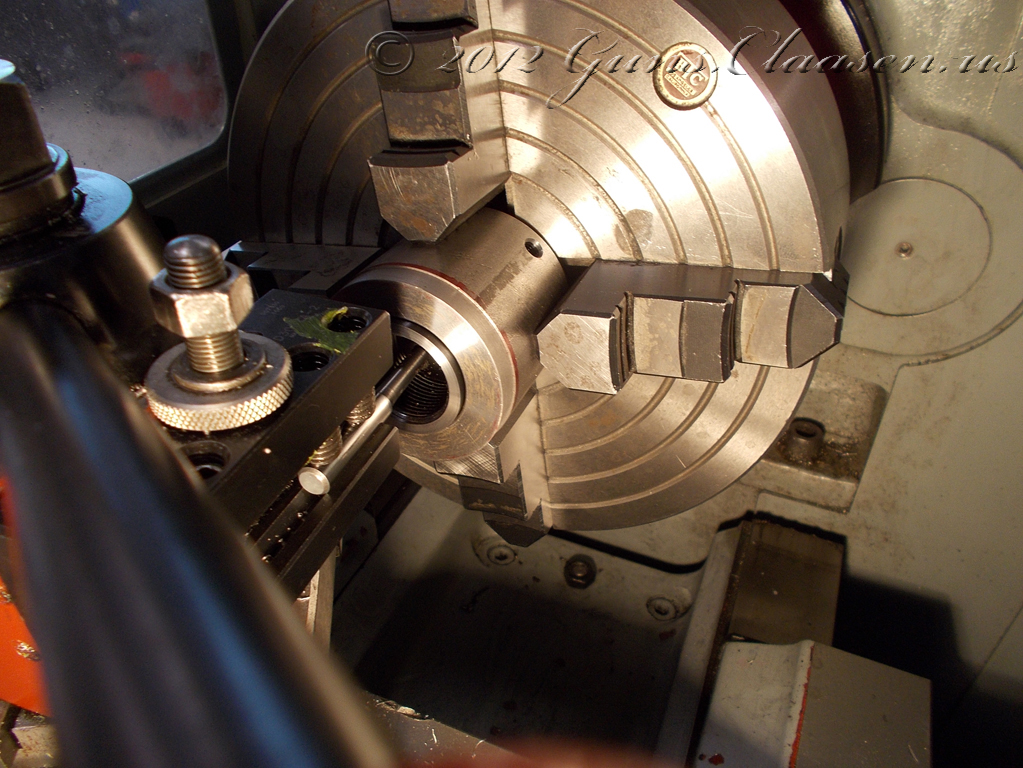
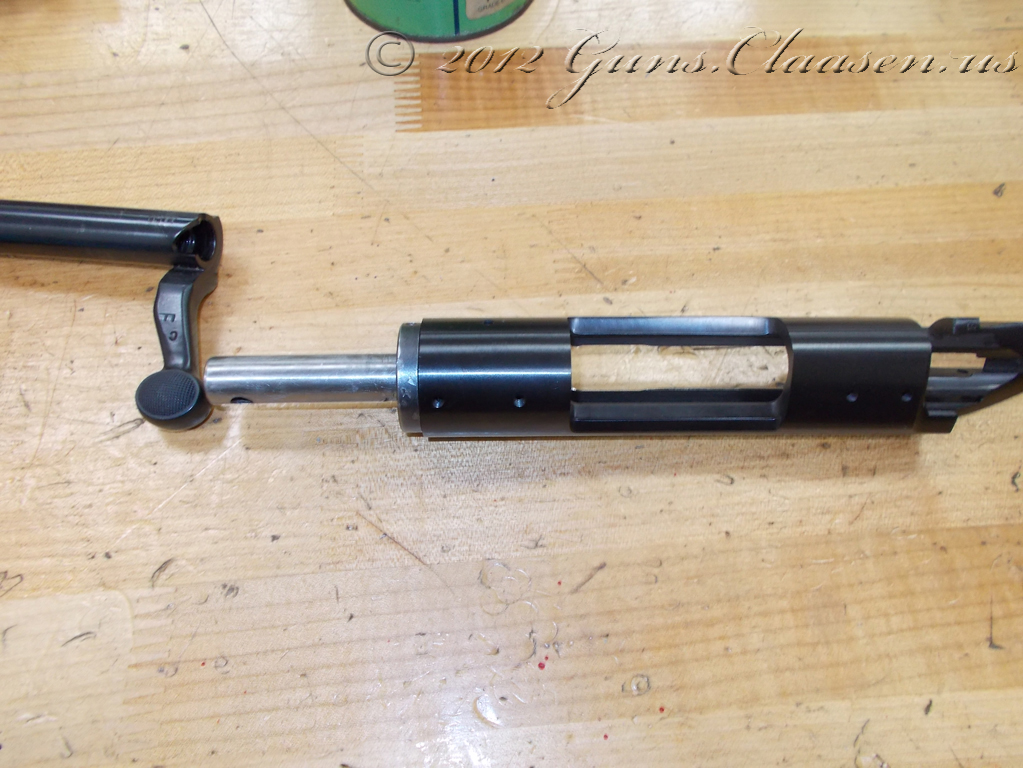
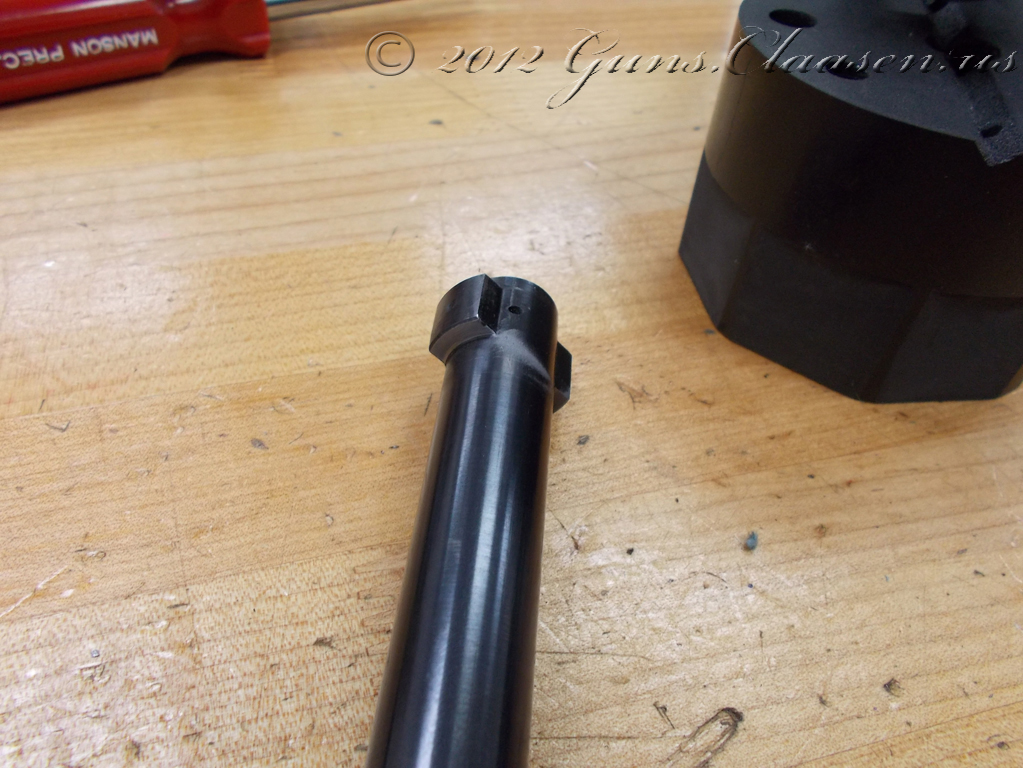
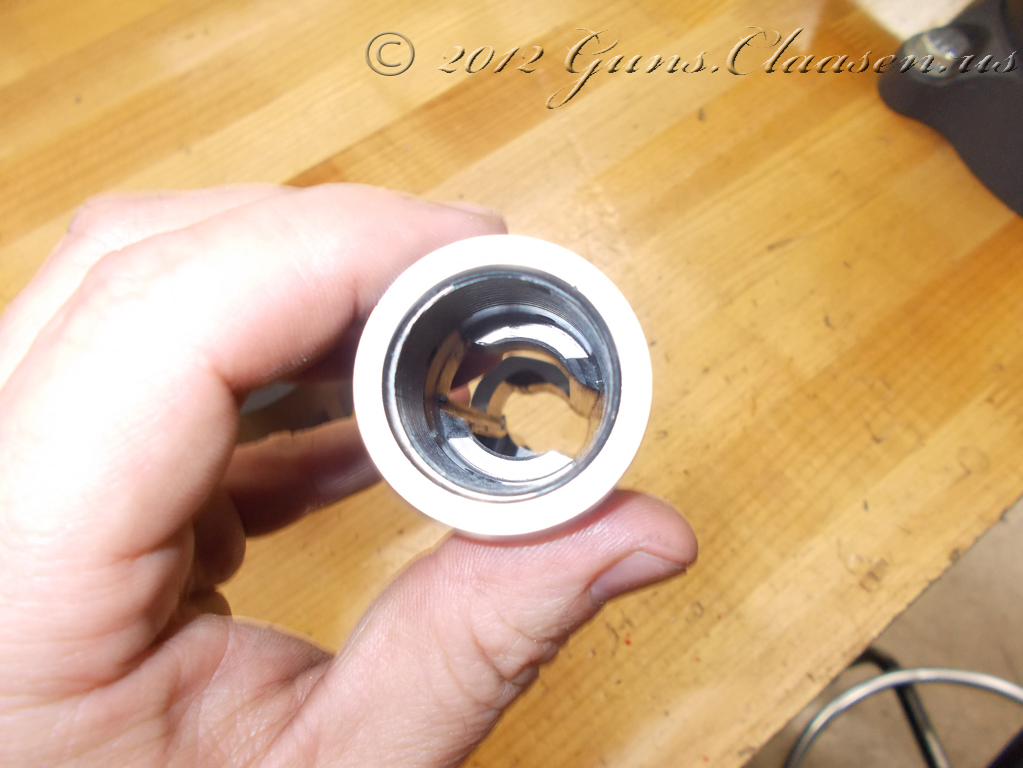
The next step is to use a tool to lap the bolt lugs onto the recoil lugs. The lapping tool is screwed into the receiver where the barrel would normally go. It has a spring-loaded center part and when the bolt is inserted into the receiver and locked into the closed position it will push the bolt lugs against the recoil lugs in the receiver. Lapping compound is a fine grinding paste and by applying some on the back of the bolt lugs, inserting it into the action and opening and closing the action, the lapping compound will slowly grind these surfaces to make perfect contact with each other. The pictures show the receiver with the lapping tool inserted, the bolt after lapping (you will note wear on the dark part of the bolt due to the grinding action of the lapping compound) and the inside of the receiver showing the recoil lugs.
Next up is the barrel and I will show the work on that in a new post.
Remington 700 project: Bolt blueprinting
Started on my Remington 700 project this week (March 19). I am putting a lot of attention to detail into this one as I am building it for my wife! This is a brand new action from Remington chambered in .223 Remington. I did contemplate doing this in 5.56×45 but we do not have the correct reamer. (I listed the calibers incorrectly before. My mistake, I am blaming it on the fact that I was working on my Winchester 94!) The first picture shows the action and bolt. The bolt is disassembled as I only need the bolt body during the barreling and chambering process. 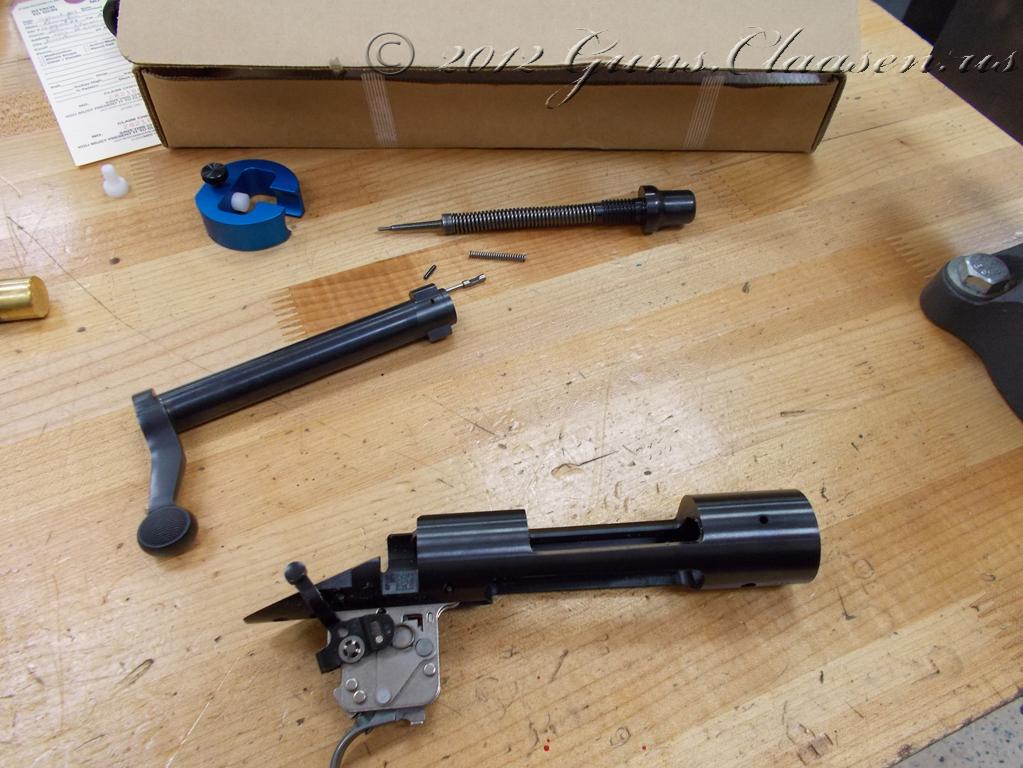
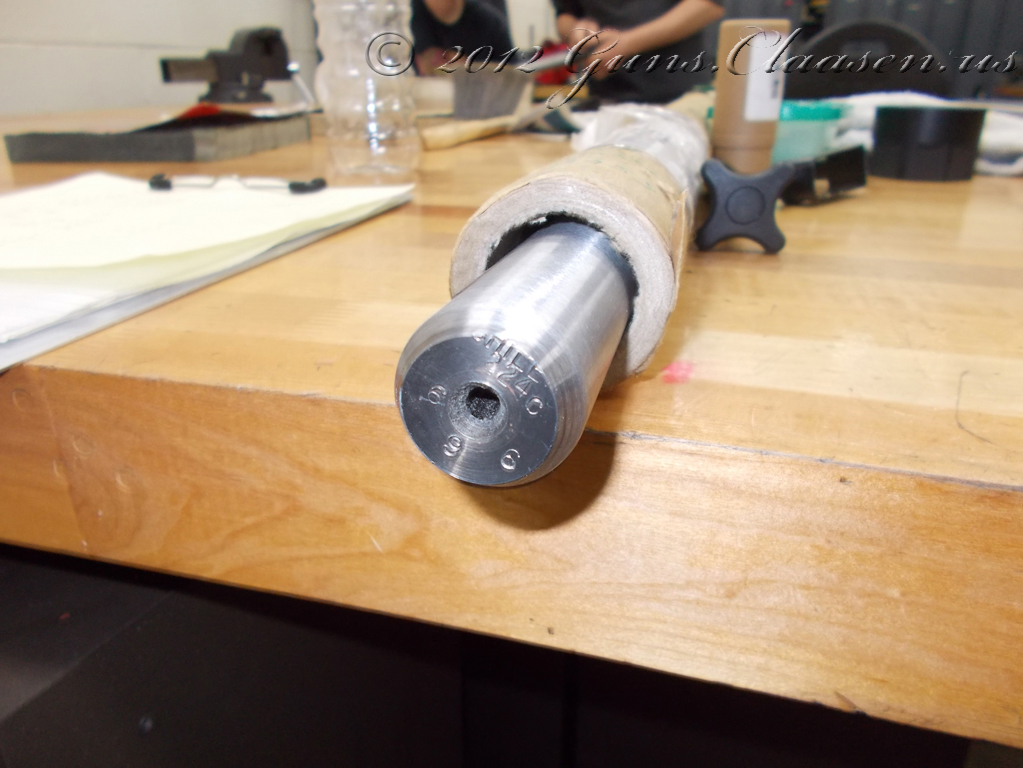
This picture shows the barrel blank. I purchased the barrel from Shilen as they give us a really good trade discount as students. The barrel has a number 6 contour (which means it is pretty thick and quite heavy) and made from chrome moly steel. The twist rate for this is 1:9 to allow for the use of a range of bullet weights.
Here is the action without the trigger assembly. You can also see the recoil lug in the background to the left and center of the picture. The recoil lug helps to control recoil once the action is mounted in a stock. On the Remington 700, this is an extra piece. On the Mauser and FN actions, this part is part of the action.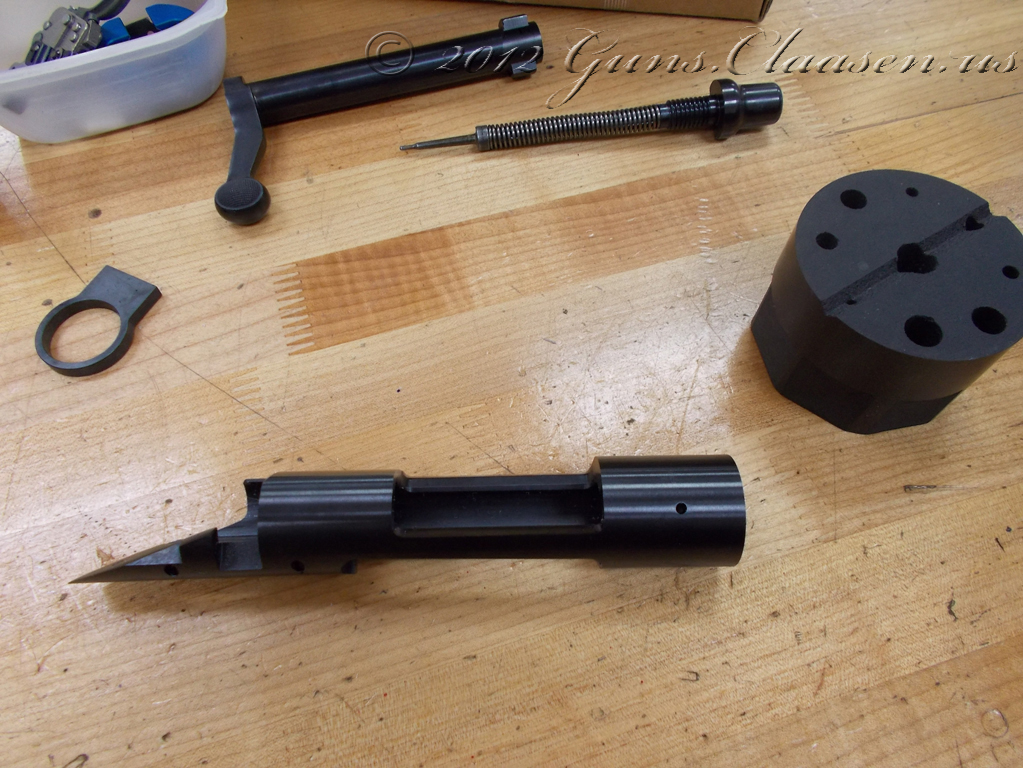
I started doing all the blueprinting work on the bolt and action. This allows for added accuracy. We use a fixture to mount the bolt in the lathe and then center the work piece just behind the lugs of the bolt. You will see the instruments we use to measure a little further down as we also use them for setting up the barrel. What is measured is known as run-out and shows how well the work piece is centered in the lathe. The more accurate the work is set up, the better it will function. I try for zero run-out but it is not always possible. For this bolt I got it to less than 0.0005 inches (12.7 microns or 0.0127 millimeters).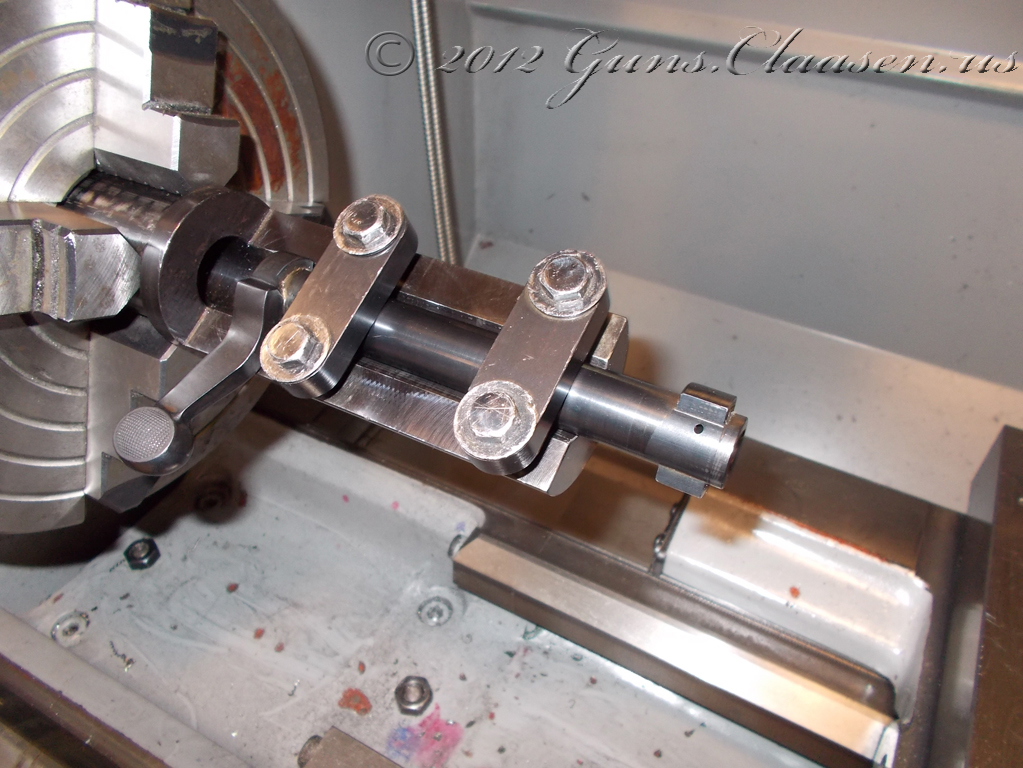
The next step was to “true” up the back of the bolt lugs. Truing the lugs just means we make sure they are the same height and that they are square to the bolt body. The first picture shows the process, the second shows the result.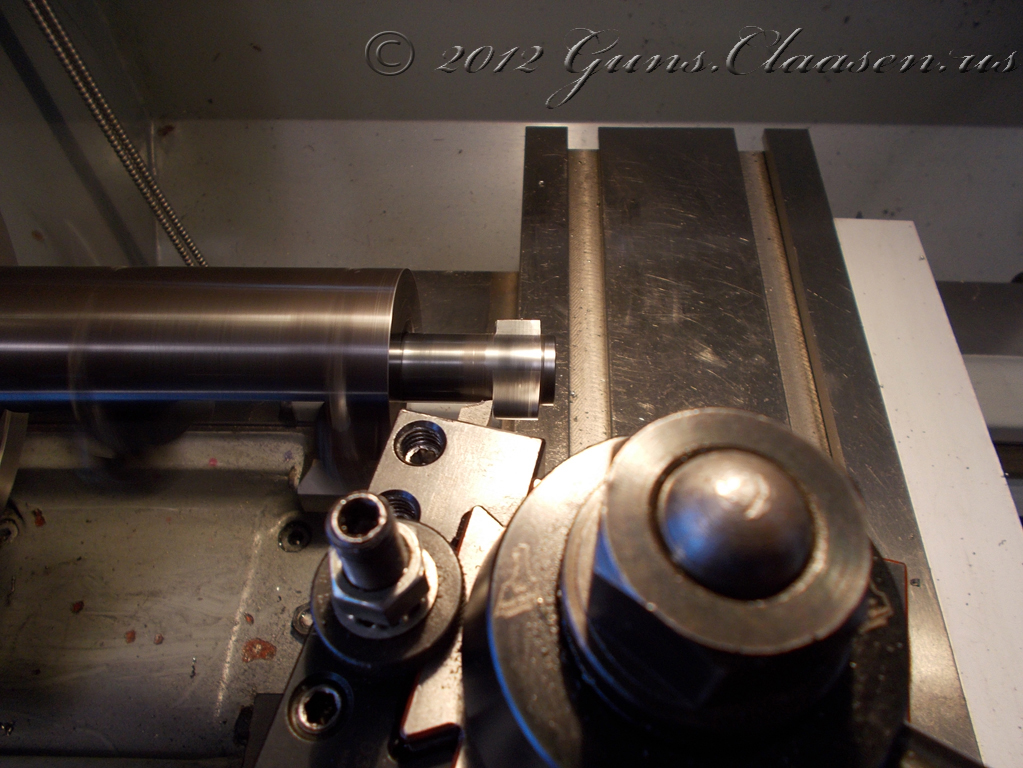
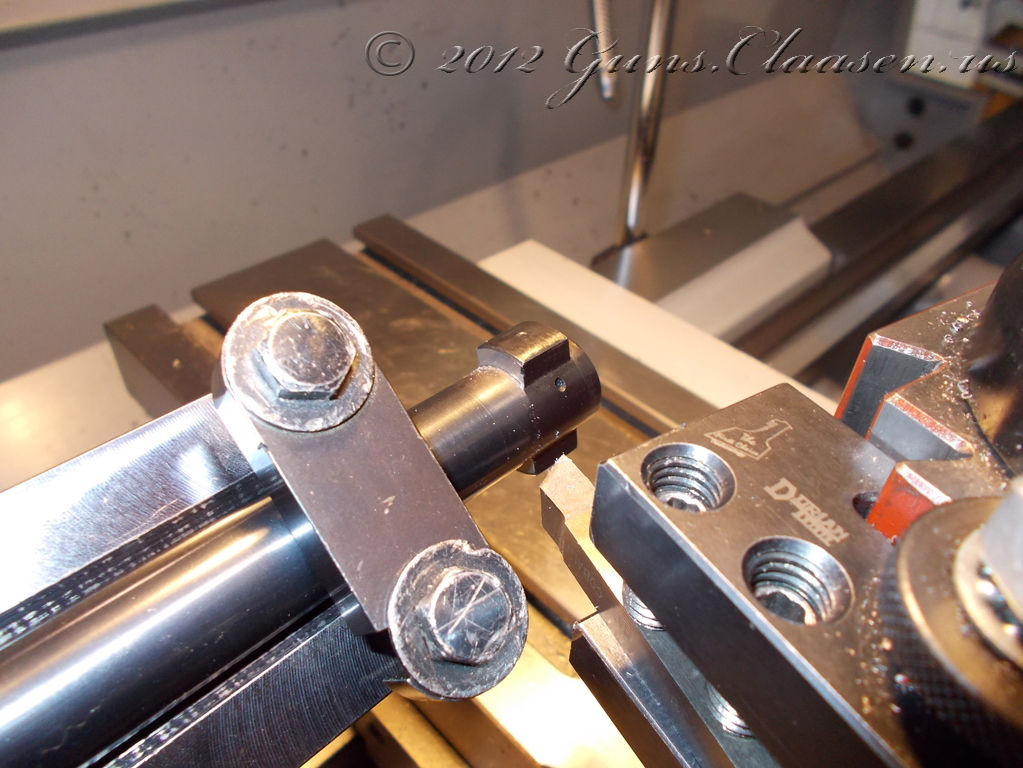
This process repeats on the front side of the bolt lugs. This is not always needed as it depends on the action. On the Remington 700 it should be done. Again I am showing a during and last picture.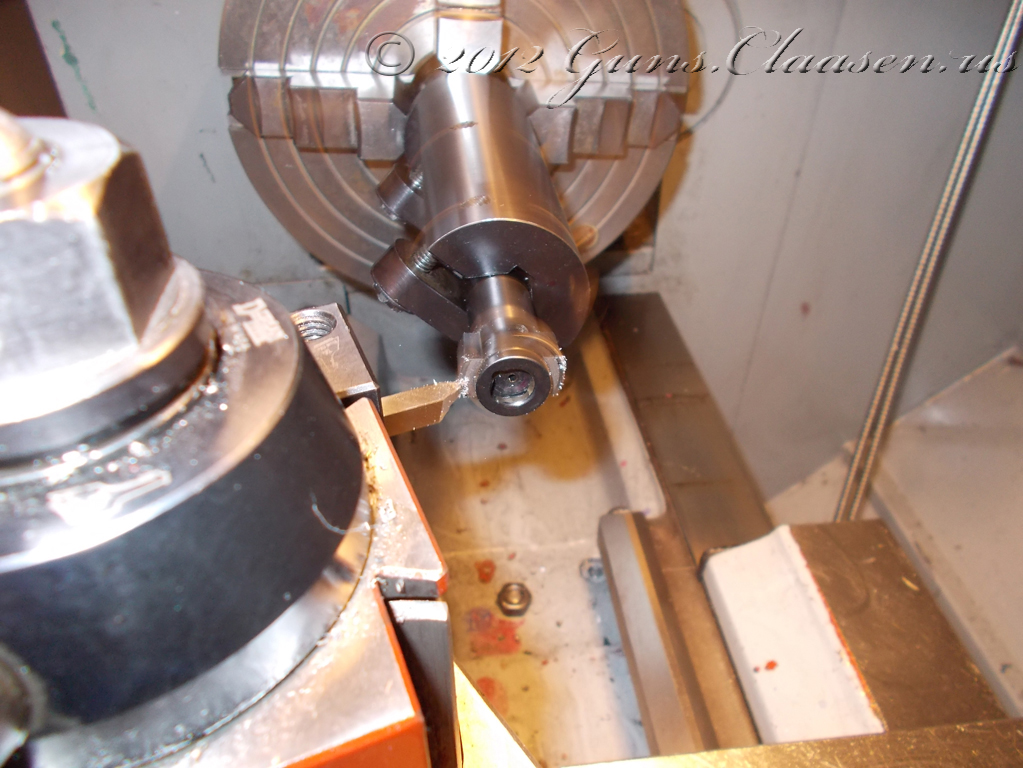
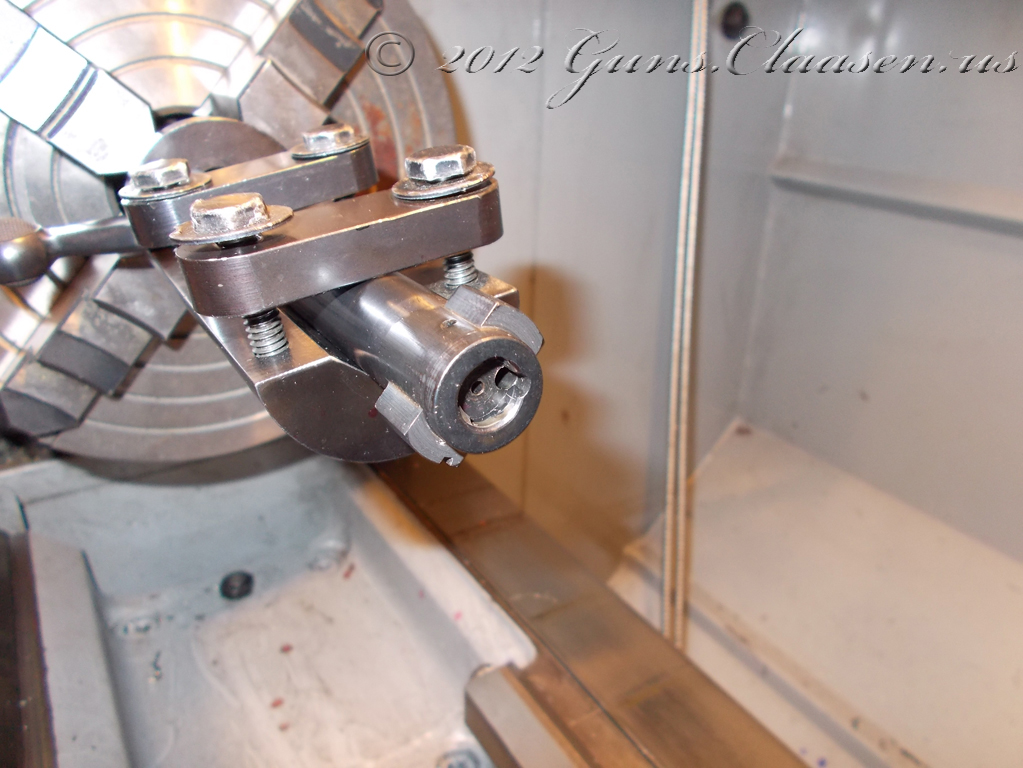
This is almost all the work on the bolt body for now.
Winchester 94 two piece wood stock
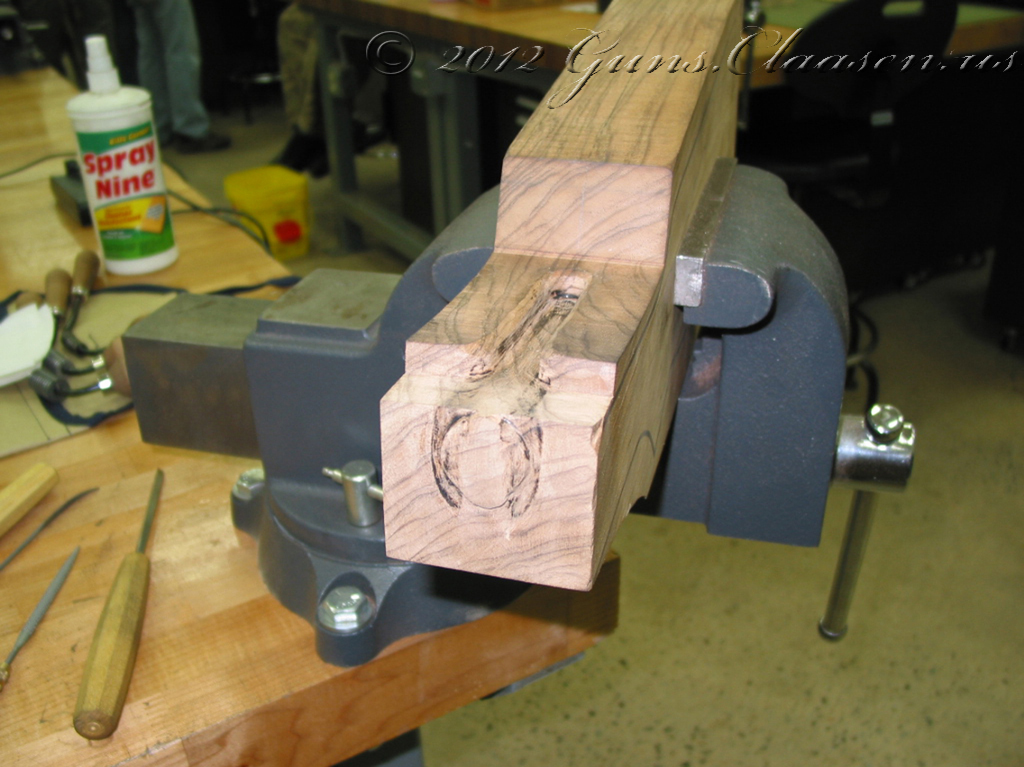
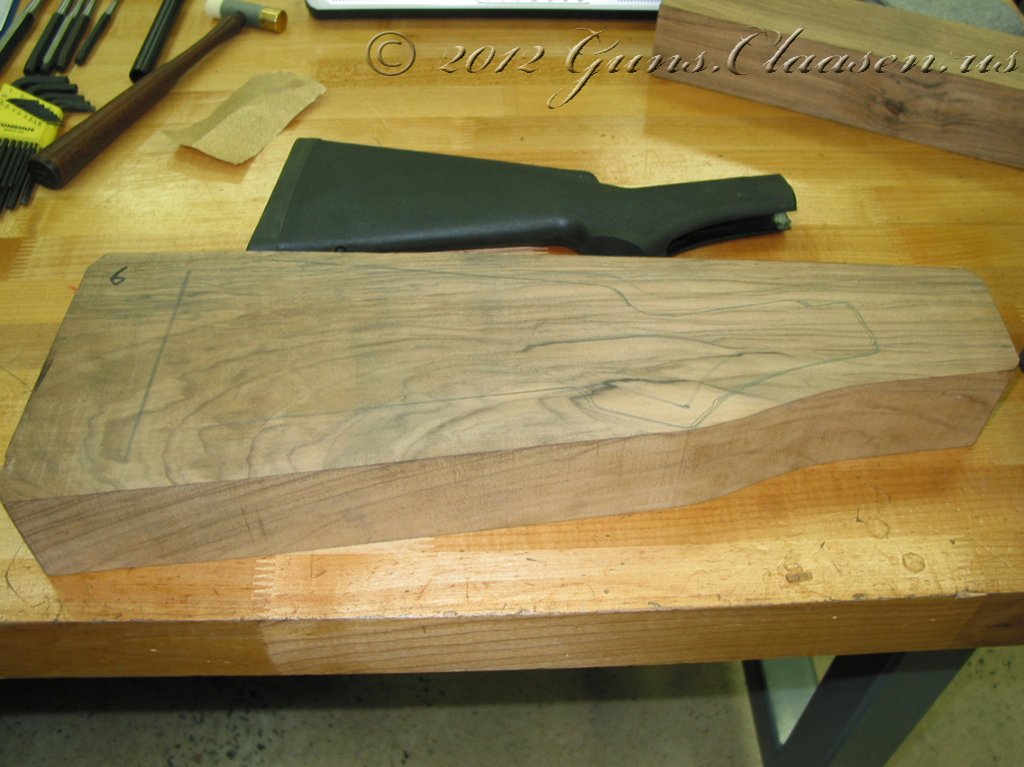
For Basic Stockmaking I chose to put a new stock on a Winchester 94 Black Shadow. Introduced in 1998, this variant of the Winchester 94 was discontinued in 2000. The Black Shadow comes with a black composite stock. The wood for this project I purchased from a former student in the gunsmithing program. The picture shows the wood blank, the original stock and the blank for the fore-end in the background.
The first step was to inlet the top tang:

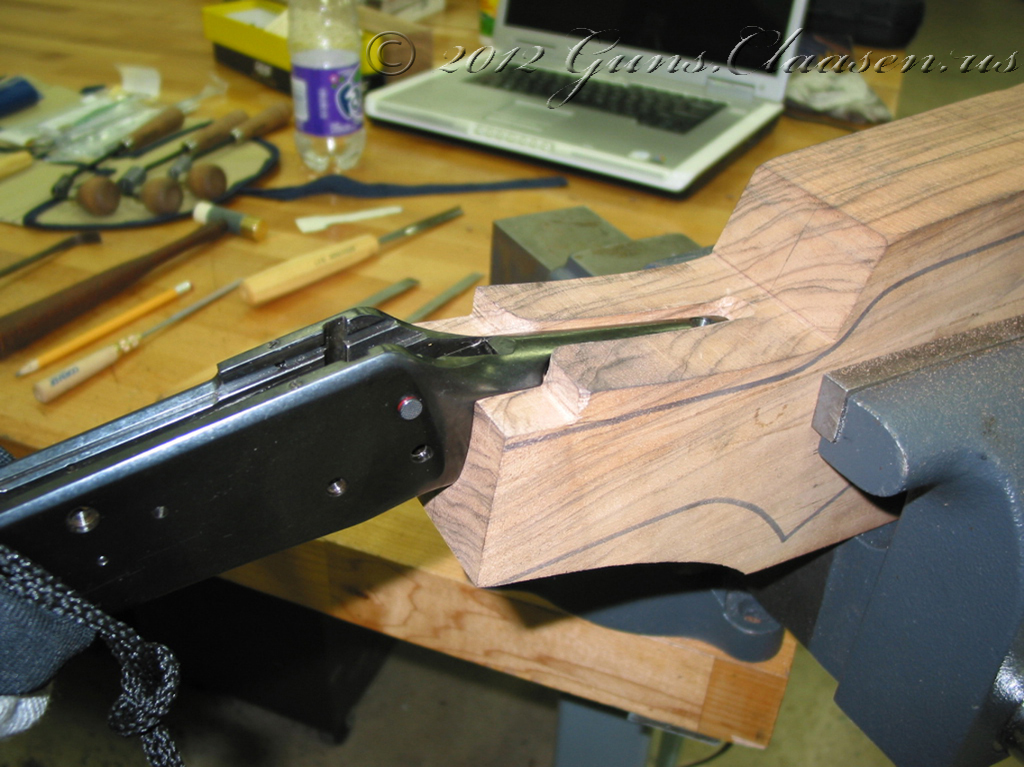
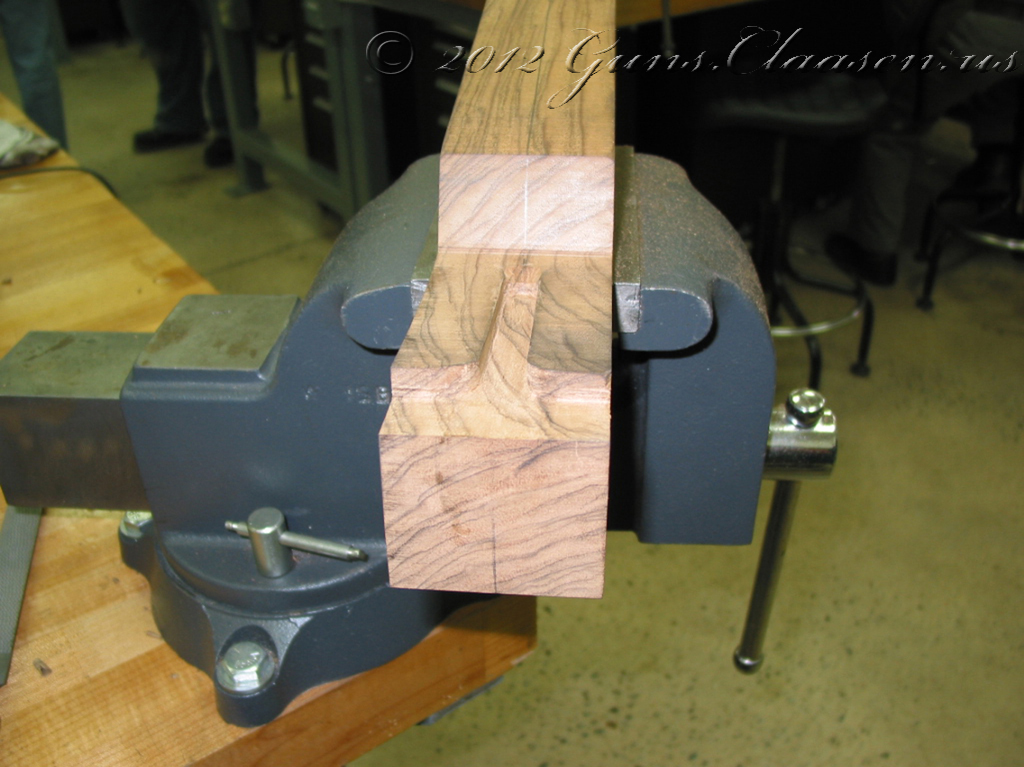
In this picture I finished the top inletting. The black marks you can see on the wood is from inletting black. Inletting black is applied to the metal part that fits to the wood and shows high spots in the wood that still needs work.